What is an Armoured Cables?
What is an Armoured Cable? Classification of Cables. An armored cable features a protective metallic layer, consisting of strips or threads, enveloping the conductors, shielding them from external forces.

Type to search pages and products — try a cable size like 3/.029.
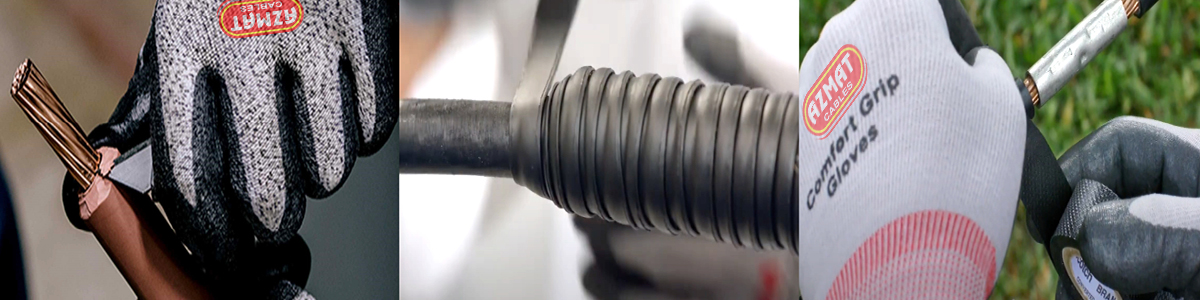
In the realm of cable protection, insulation and jacketing play pivotal roles, offering both mechanical fortification and electrical safeguarding. Deciphering the right materials for these layers is a consequential endeavor.
Extruded and tape insulation represent the primary methods of application, each with distinct merits and demerits to consider for optimal cable performance.
Extruded insulation, more cost-effective and easier to apply than tape counterparts, boasts lighter weight, reduced flammability, and simpler repairability.
Tape insulation, often earmarked for high-performance scenarios, demands meticulous wrapping and fusion processes, rendering it pricier but indispensable for rugged environments.
Diverse material options are available for tape jackets and insulation, each offering unique benefits tailored to specific requirements.
Renowned for its robust tensile strength and durability, Mylar tape serves as effective cable insulation, withstanding temperatures up to 150 degrees Celsius.
Comprising aluminum foil laminated with polyester film, this tape offers heat and light reflection alongside chemical and flame resistance.
Recognized for its wide temperature range, low dissipation, and flame resistance, PTFE tape undergoes heat-sintering for enhanced performance.
While not typically primary insulation, polyester tape serves as shield isolation and insulation protection, bolstering cable mechanical strength.
Boasting mechanical toughness and a vast operating temperature range, Kapton tape fortifies cables against abrasion, weather, and chemical degradation.
Renowned for its extreme resistance to abrasion, chemicals, and heat, TFE tape excels in high-temperature environments, meeting stringent Mil-Spec standards.
A composite tape with glass scrim backing, Mica tape offers exceptional insulation properties, resilience to moisture, radiation, and thermal overloads, withstanding temperatures up to 450 degrees Celsius.
What is an Armoured Cable? Classification of Cables. An armored cable features a protective metallic layer, consisting of strips or threads, enveloping the conductors, shielding them from external forces.
Types of Signal Interference & How Proper Shielding Can Stop Them. As technology advances, communication and control systems have become more complex and are expected to travel distances farther than ever before.
Types of Insulation Materials for Wire and Cable. Understanding Wire & Cable Insulation. Insulation, also known as a dielectric in radio frequency cables, is a nonconductive material essential for protecting wires from environmental hazards and electrical leakage.
Thermoplastic vs Thermoset. Understanding Thermoplastics. Thermoplastic materials are characterized by their molecular structure, which allows chains of molecules to separate upon heating.
Common Conductor Materials for Wire and Cable. A conductor is the core of any wire or cable, responsible for transmitting electricity. Metals are predominantly used as conductors due to their high conductivity.
Conductor Size. British Standard Wire Gauge Reference Table. British Standard Wire Gauge (SWG) wire diameters in inches and millimetres, from gauge 0 to 22.
Solid vs. Stranded Conductors in British SWG. Solid conductors consist of a single, solid strand of metal, typically used in smaller cables, while stranded conductors are composed of multiple metal strands twisted together.